


Finishing: The Hidden Bottleneck
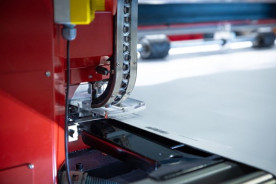
Credit: Probo
The growing demand for wide-format printing at in-plants is accelerating production, and exposing finishing as a critical bottleneck. As tighter deadlines become the norm, manual finishing processes often can’t keep pace, creating backlogs. Without addressing finishing constraints, many in-plants risk undermining the efficiency gains promised by their wide-format investments.
As highlighted in this Wide-Format Impressions article, finishing automation offers practical ways to remove these constraints. Solutions range from semi- or fully automated grommet presses and electric media roll lifters to conveyor-assisted welders, automated sewing systems, and fully integrated platforms that combine cutting, welding/sewing, and grommeting. These technologies reduce the number of operators required per job, lower skill barriers, and minimize manual handling and errors.
Print providers that prioritize finishing are already seeing the benefits.
- Britten Inc. identified sewing as a major bottleneck and invested in integrated banner finishing with automated sewing, improving capacity and operational resilience.
- Probo took a similar approach, using fully integrated finishing to expand banner production, reduce outsourcing, and win higher-volume work without sacrificing turnaround or quality.
In both cases, the payoff went beyond speed, delivering labor savings, better scheduling control, and long-term efficiency. As the industry evolves, finishing is no longer just the final step — it is a strategic lever that allows print businesses to eliminate bottlenecks, control costs, and maintain a competitive edge. Read the full story here.
- Categories:
- Finishing - Conventional
- Finishing - Digital
 Tackling the Cutting/Routing Bottleneck
 Redesigned Standard Website Highlights 'The Power of Smart Finishing'
 Duplo USA to Exhibit at PRINTING United Expo
 Standard to Demo 20+ Solutions at PRINTING United 2025
 Hunkeler Unveils GEN8 EVO Roll to Stack Solution
 New Cutter in Santa Cruz Brings Multiple Improvements

