


Producing awards and plaques is an excellent value-added service for in-plants that not only saves money but also speeds turnaround, boosts visibility, and brings new work in-house.
As in-plants strive to prove their value to their parent organizations, instead of winning awards, they’re making them. For in-plants, awards and plaques are an amazing opportunity, especially at colleges and universities.
However, higher education isn’t the only space that needs awards. Below are four different in-plants that hit the ground running with awards and never looked back.
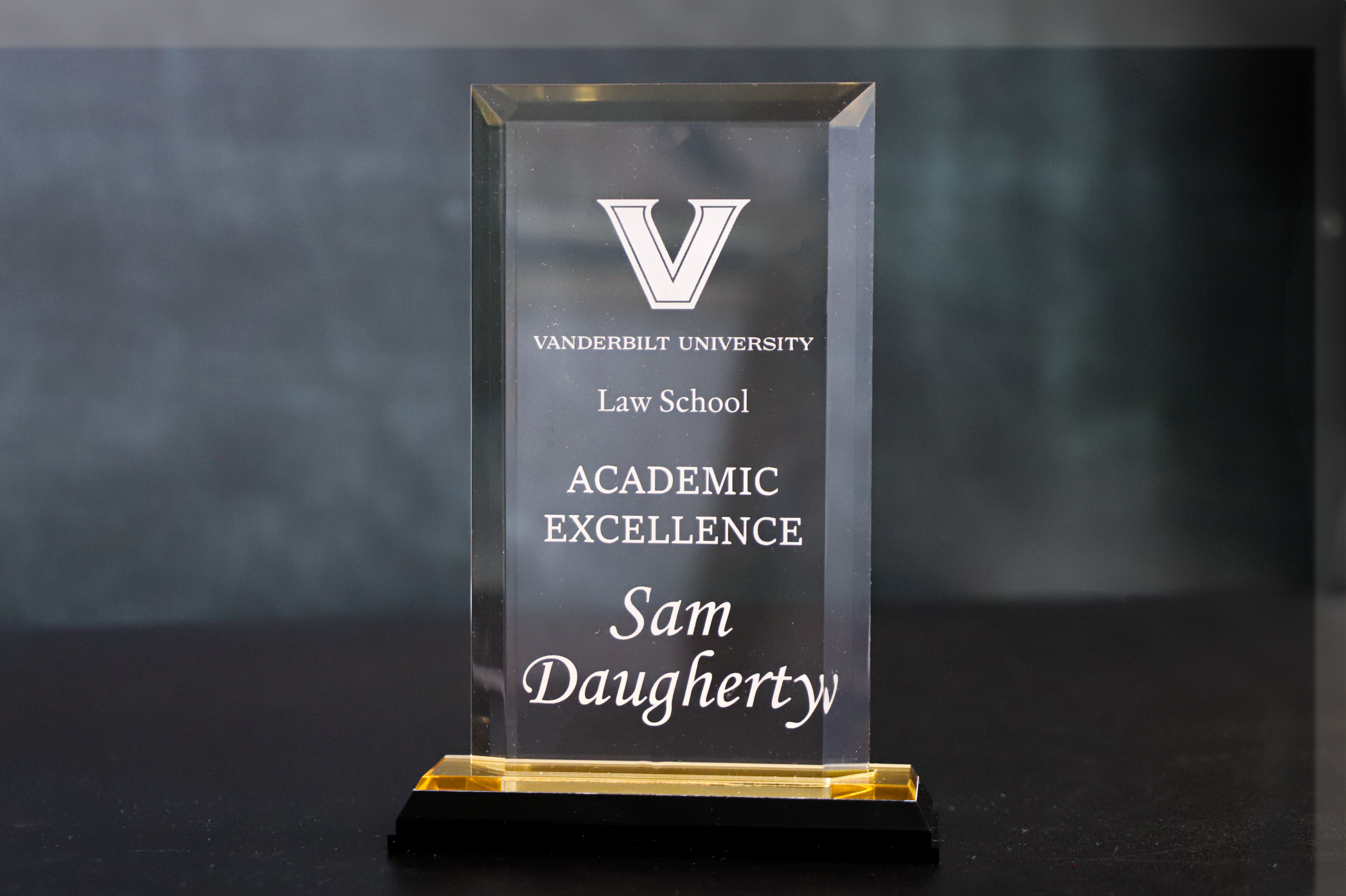
Vanderbilt University
If you ask Mike Puckett, director of Vanderbilt University Printing Services, he’ll tell you the Nashville, Tennessee-based in-plant started doing awards “purely by accident.”
“We had an old Rotary engraver that was taking about 40 minutes to do a name tag. And so, my first purchase when I got hired here was to invest in a laser engraver,” Puckett says.
The shop initially used the new Epilog Fusion Edge 24 only for tags — until the day Puckett visited the manufacturer’s showroom.
“They showed me all this other stuff that we could do with this laser engraver. I was just blown away,” Puckett says. “And so, I went to PRINTING United in Atlanta and met a few different vendors and the people who supplied stuff for the laser engraver. And then I just started purchasing stuff and trying it, and it turned out to be fantastic.”

Since seeing the light, Puckett says his in-plant has produced hundreds of different awards and has even figured out how to engrave in color using masking tape and spray paint. The in-plant also engraves multiple substrates like glass, acrylic, metal, and even chefs’ knives for culinary awards.
Among other benefits, producing awards has helped limit the number of outside vendors the university turns to, Puckett says.
“So before, if they needed something like awards, they would just go to someone else. But now the word is getting out that, ‘Hey, I can do this,’” he says. “So they have one place on campus to come to get it done.”
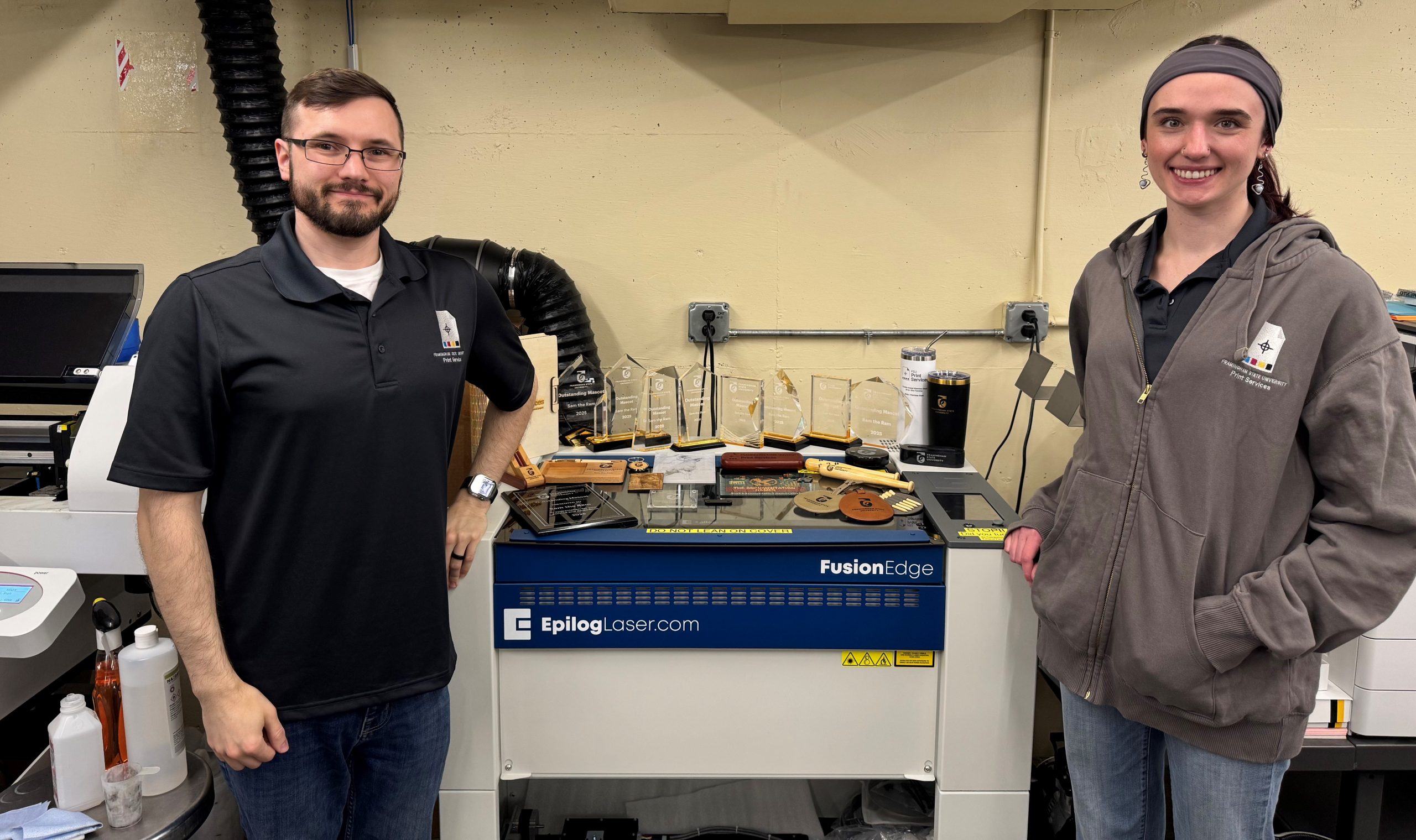
Framingham State University
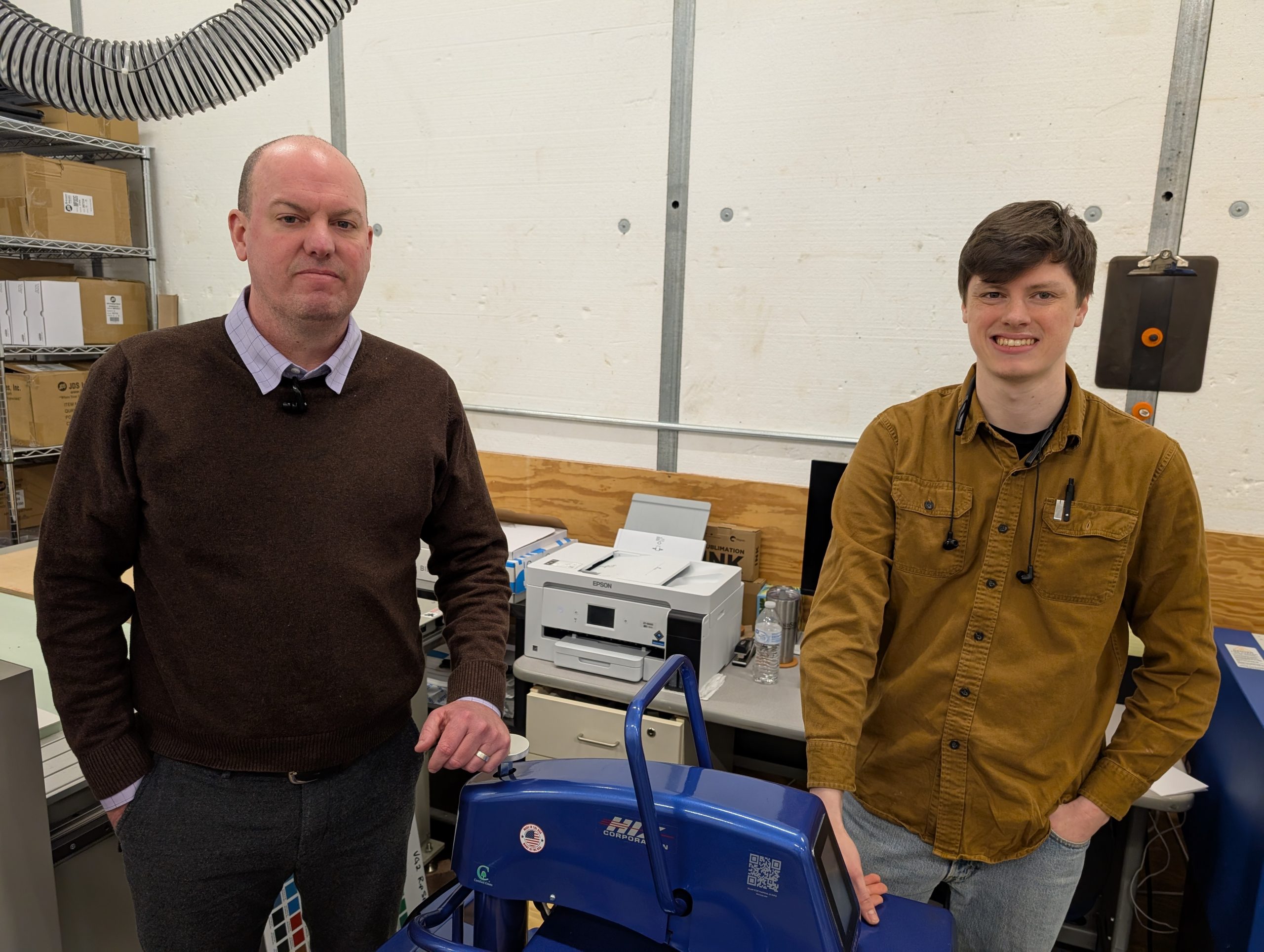
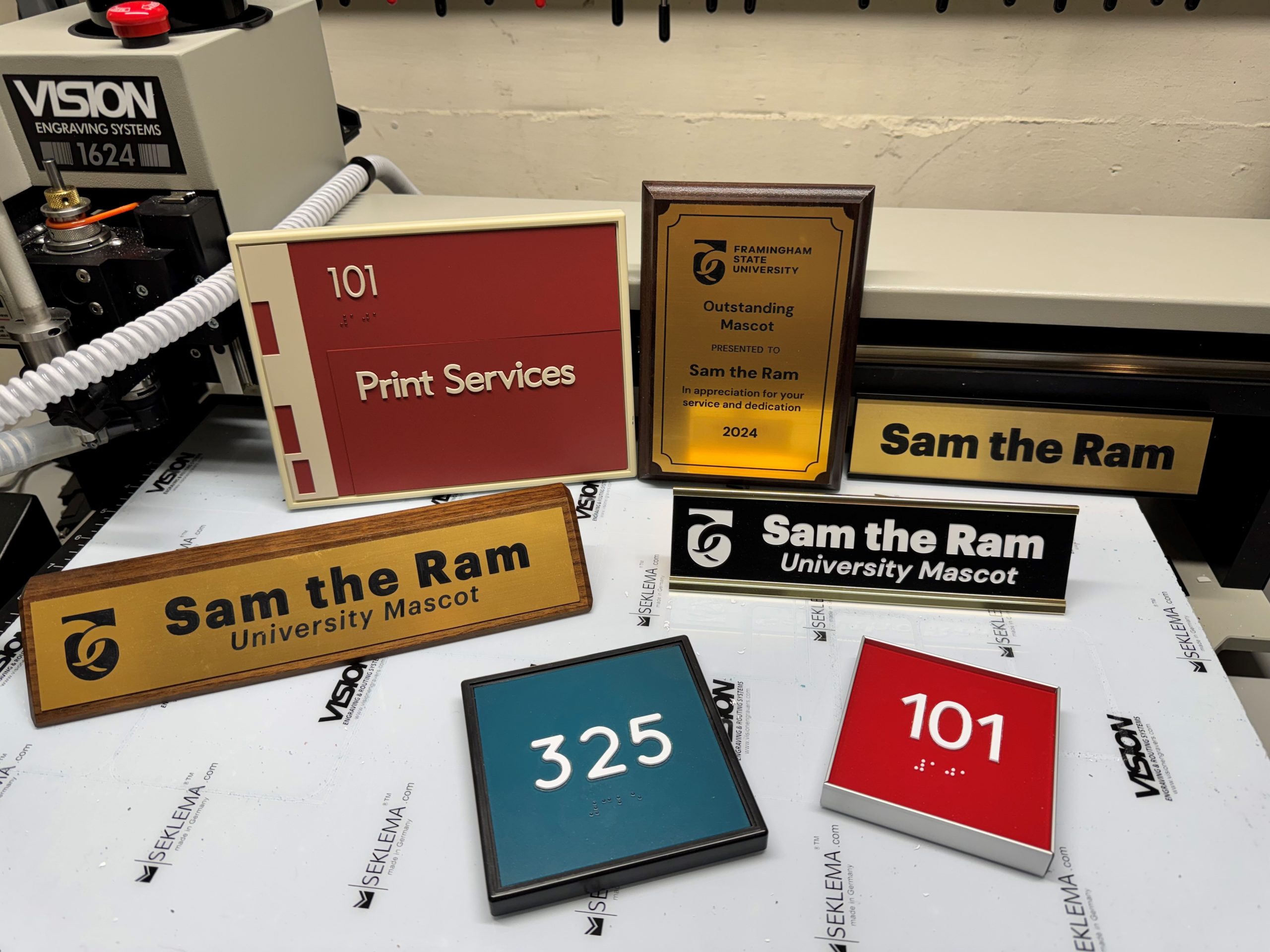
At Framingham State University, awards are presented each semester, so they have always been on Dillon Handy’s radar. But the supervisor of FSU Print Services, located just outside of Boston, says his in-plant’s journey with awards actually began with ADA-compliant signage.
“The university was in the process of procuring a CNC engraver to create ADA-compliant signage, first and foremost,” he explains. “Our capital projects team purchased the machine, but with the intent of us being able to run it and manage it.”
The in-plant engraved on plaque material first, then ventured into acrylic, though that wasn’t exactly a walk in the park, Handy notes.
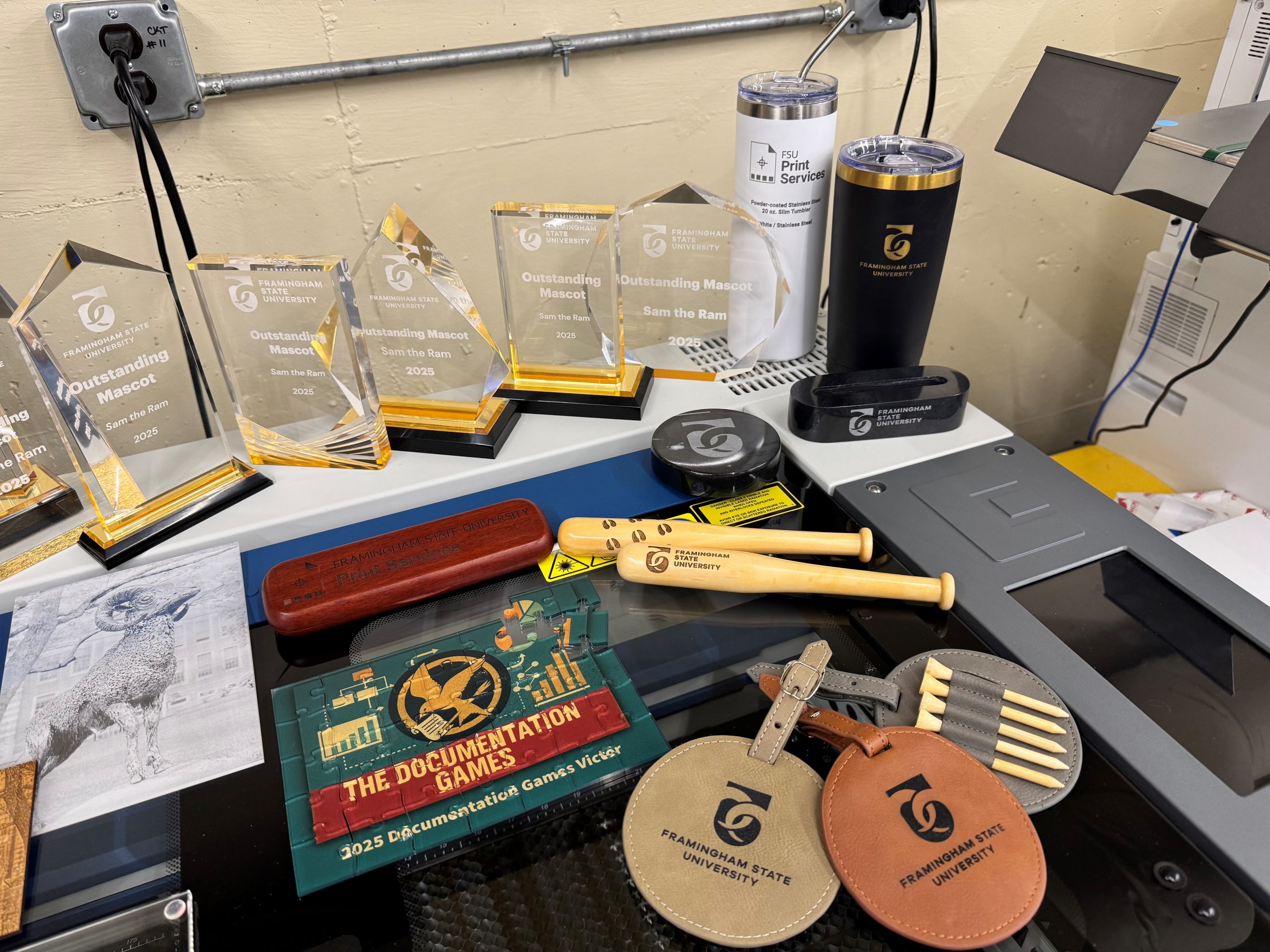
“[The plaque material] came out great. We have faculty and staff get them every semester. They love them,” Handy says. “They love how inexpensive they are through us, the amount of time savings ... cost savings, as well as just having more control and customization options of internal things. And then we started to think about doing acrylic. Not the most ideal situation with a CNC engraver. It would take us 35 to 45 minutes a piece.”
That all changed with the purchase of an Epilog laser engraver over the summer, which was made possible thanks to all of the plaque jobs the shop was doing with the CNC cutter. Now, it takes just three to five minutes to engrave on acrylic, and the Epilog has expanded what the in-plant is capable of offering.
“For the faculty and staff, they love having the ability to just come straight to us because ordering through a state agency, they have to go through the whole requisition and purchase order process. That takes time, and getting quotes … just takes time,” Handy says. “Whereas we just cut that all out, and we can say, ‘Hey, we’ve got X, Y, and Z for you on the shelf. If you want one, we can engrave it within half an hour.’”
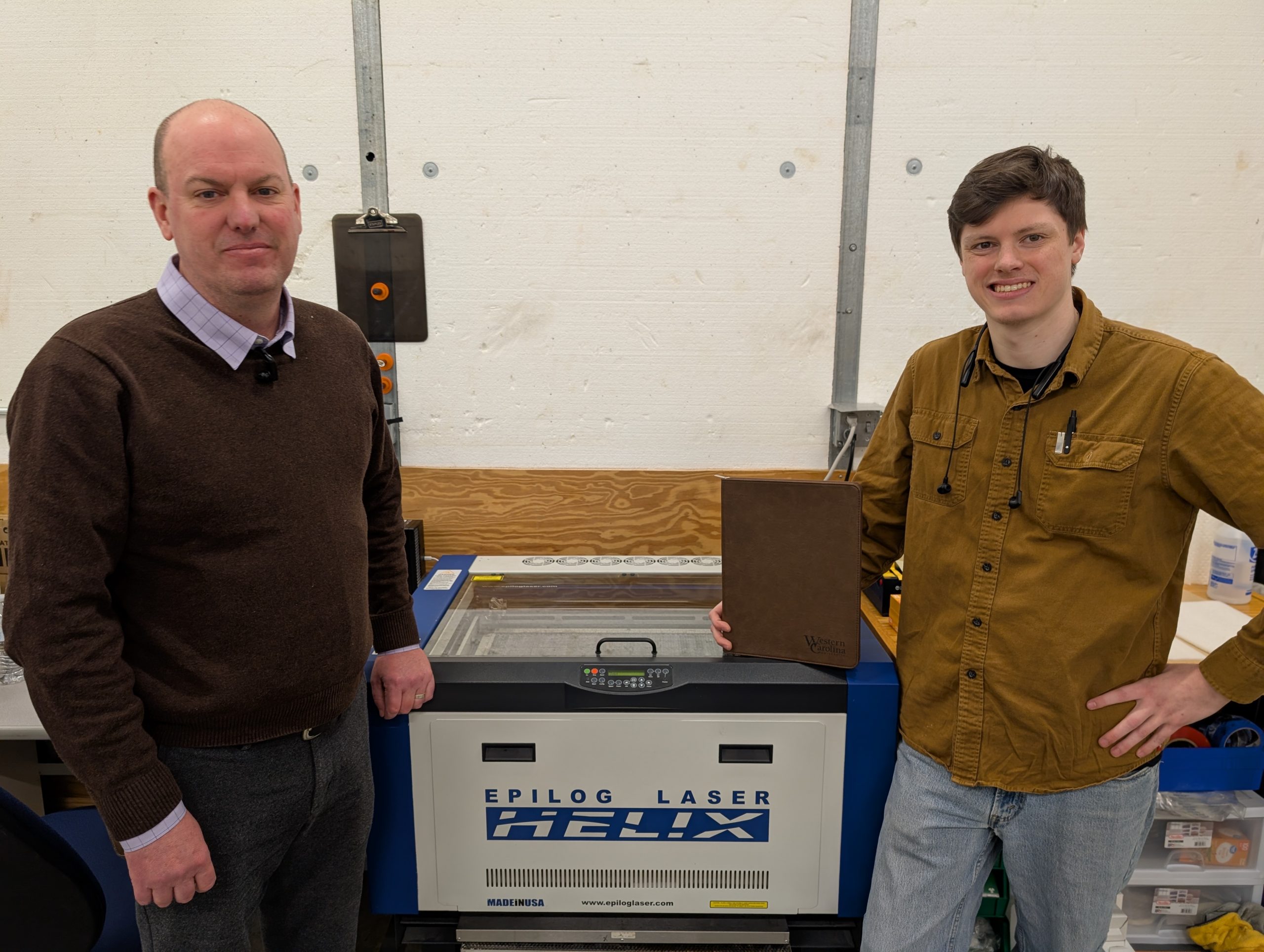
Western Carolina University
When Al Goranson took over as director of Print and Mail for Western Carolina University in Cullowhee, North Carolina, the in-plant was already producing awards. But it wasn’t always that way. Before his time, he says, the university outsourced its awards to external vendors.
“The turnaround times were not manageable. We’re a little bit isolated here, with the closest place being about 48 miles away, which is not undoable, but it was just challenging logistically,” Goranson says. “So, we got a sublimation printer that you could do iron-on transfers to a piece of acrylic with. That’s the kind of thing we started with.”
Then the college wanted a solution for name tags, so like the other university in-plants in this article, his shop got an Epilog laser engraver. Once the in-plant got a reputation for sublimation and engraving, things really took off, he says. Today, 7% of the in-plant’s total work is awards, name tags, door signs, and desk plates, averaging about $60,000 a year.
Providing these value-added products has led to new business. Goranson believes that when you take the time to get smaller projects like plaques and name tags right, other opportunities will fall into your lap.
“It just starts to point to your competency in general. We did a really good job of making sure we could do the little things, the name tags and all of these little things we were doing,” he says. “And once we got into that they asked us to take over ADA signage. I don’t think that would’ve happened had we not been competent with the other stuff.”
We did a really good job of making sure we could do the little things, the name tags and all of these little things we were doing. And once we got into that they asked us to take over ADA signage.
— Al Goranson
Lockheed Martin Missiles and Fire Control
According to Cristin Underwood, Publishing Center manager for Lockheed Martin Missiles and Fire Control, awards and plaques fell into the in-plant’s lap a couple of years back when she and her team were wondering what else they could do with their Mimaki JFX200-2513 flatbed printer.
“It was one of those ‘we have the machine, now what else can we do with it?’ moments,” she says. “We are always trying to capitalize on recognition and appreciation as part of our growth mindset and employee experience. Offering awards and plaques was a great next step in boosting morale and highlighting recognition to all customers.”
In 2025 alone, the in-plant managed to produce 95 plaques a month between its two locations in Dallas, Texas, and Orlando, Florida. And even though awards are rumored to be labor intensive, Underwood says the ability to print directly onto acrylic has really changed the game.
When others see the award, it strikes a conversation asking questions about how it was printed. This brings new customers to us asking how they can print an award, along with other capabilities and offerings.
— Cristin Underwood
“Our process doesn’t feel time-consuming,” she says. “Once we have the print-ready file, we upload it to [Mimaki] Rasterlink software, change the print settings for that design, place the acrylic on the flatbed, and print. Direct printing makes a big difference in labor and time.”
Underwood says offering this service brings more visibility to the in-plant.
“If an award is being presented at an event, then there is more visibility,” she notes. “When others see the award, it strikes a conversation asking questions about how it was printed. This brings new customers to us asking how they can print an award, along with other capabilities and offerings.”
Lasting Thoughts
If your in-plant has yet to dip its toe into the awards and plaques arena, here are some words of advice from your industry peers.
Puckett: “You can’t act too soon on this. I was nervous about purchasing [an engraver], thinking ‘A name tag costs $13. How many am I going to have to make to pay for this thing?’ And the revenue didn’t so much as pay for it, but the savings from the labor costs from the laser engraver did. And then everything I’ve done other than the name tags has just been extra money in the bank.”
Handy: “If you have the request for it, I would say look into it at minimum, especially for a laser engraver because all of the file setup is digital. If you already have members of your team that have a good efficiency in a digital workflow with design software — that’s all it is; that’s the entire thing.”
Goranson: “It’s super simple. It’s not hard to do, and it’s cheap to get into. But it would be good if you can sell somebody on the idea of it. Even if you’re outsourcing to start, see if you can get 30 awards a year, or even with 15 you can probably pay for it. But you’ve got to have somebody with expertise who wants to do it.”
Underwood: “Not only do customers appreciate the opportunity to stay in-house as a source to help recognize others, but it also allows us, as an in-plant, to find joy in helping spread recognition and appreciation. Showing appreciation to others is invaluable. Also, as an in-plant you are saving your company money by producing these products in-house. We saved the company over $20,000 last year in acrylic awards alone.”

