


From Shoeboxes to Software: Print MIS Transforms Alpine Schools' In-plant
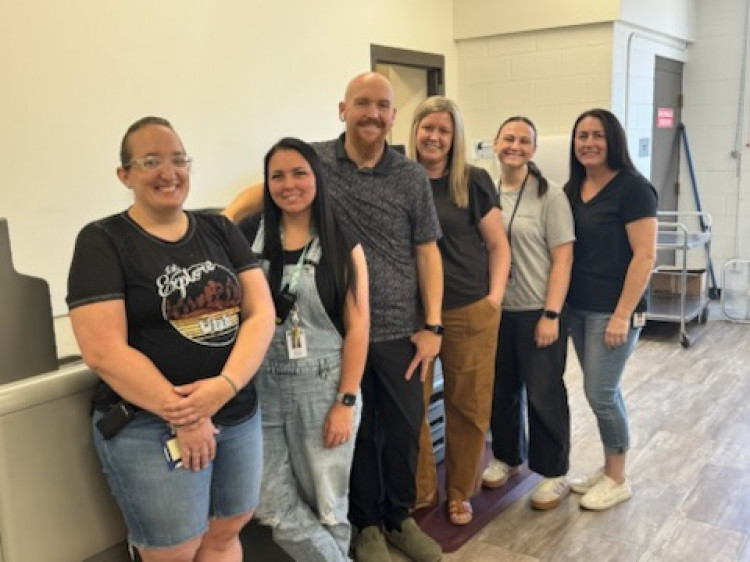
Located just south of Salt Lake City, Alpine School District Printing Services operates with efficiency and purpose. Supporting more than 130 schools and departments, this in-plant print center has become a model of public sector innovation—delivering high-quality, cost-effective print services specifically designed for educational needs.

Jake McDonald
With just four full-time staff members plus three part-time employees, Alpine’s 3,700-sq.-ft. print center in American Fork, Utah, handles a remarkable amount of volume. Overseen by Printing Services Supervisor Jake McDonald, the in-plant generates approximately $1.4 million annually and is on track to match or exceed that figure this year. During one particularly demanding summer, the team printed and bound 600,000 books in just three months, McDonald says. The bulk of the in-plant’s work comprises curriculum, posters, vinyl banners, brochures, and NCR forms.
To complete this work, the shop relies on a Canon imagePRESS V900 and Ricoh Pro C7210 digital color presses along with five black and white devices: three Ricoh Pro 8320s and two Canon varioPRINT 145s, all with inline coil punching. Its wide-format arsenal includes two HP Latex 335s, a Canon 4600, and a Xante X-33 flatbed printer to print anything from yard signs to plastic door plates and plaques. For bindery, the shop uses a pair of Koilmatic coil inserters, a Duplo DBM-150 bookletmaker, and a Duplo DC-616 cutter/creaser.
To manage workflow effectively, McDonald implemented twice-weekly “stand-up” meetings where the team collaborates on priorities.

The in-plant's 3,700-sq.-ft. facility
“We literally stop what we’re doing at that moment and discuss anything that needs attention,” he explains. “If there’s nothing shop-related to discuss, we take 10 minutes to share what’s happening in our lives. These short, informal meetings have improved communication and helped us stay aligned as a team.”

Prepress Assistant Jalynn McBride
McDonald believes success depends on making team members feel valued.
“The print environment involves repetitive, tedious work that can go unappreciated,” he notes. “I make it a point to thank my team consistently and let them know their work matters.”
During the demanding summer months, McDonald hosts weekly BBQs where the team opens the shop’s garage door and takes a break to enjoy a meal together. “You spend a lot of time with your work family,” and so taking time to connect has strengthened his team’s culture.
A Career Built on Service
McDonald embodies dedication to Alpine School District. His journey began at just 14 years old as a part-time sweeper for the district. Through hard work and determination, he progressed through various roles in the print shop—from finishing technician to offset press operator to prepress specialist. After 14 years of hands-on experience, McDonald was appointed supervisor of the print shop in 2020.
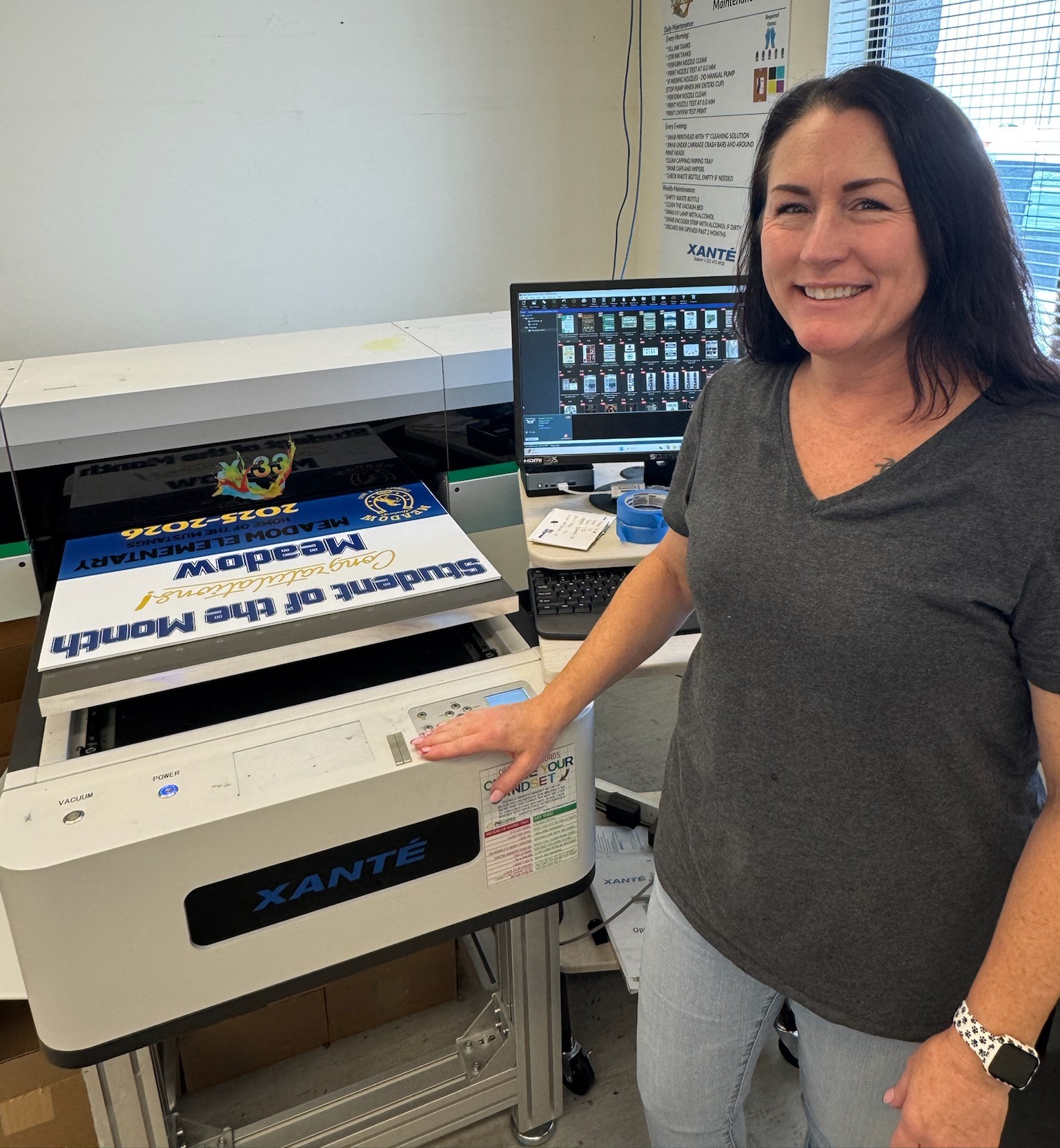
Wide-format Technician Wendi Jensen
He feels fortunate to have had many impactful mentors around him, including his parents, who instilled the importance of a work ethic in him from a young age.
“I just want to be a good human,” McDonald says. “That’s what I teach my kids, and that’s how I try to lead my team.”
When McDonald assumed his leadership role, he identified a critical need: replacing the in-plant’s manual, paper-based tracking system with a comprehensive management solution. After evaluating several options, he presented edu Business Solutions’ Print Shop Pro (PSP) in-plant print shop management (Print MIS) and Web-to-Print (W2P) software to district leadership, who quickly recognized its potential value.
“Before PSP, we tracked everything with pen and paper. Previous records were literally stored in shoeboxes,” McDonald recalls. “When schools called about past orders, it could take days to locate a single invoice.”
The implementation of PSP transformed the operation, even though the transition happened during the in-plant’s busiest season.
“It’s changed my life,” says McDonald. “I remember spending hours—days—on internal billing and pricing. With PSP, all of that is automated and organized. I can type in an order number and instantly see exactly what the job was, where it went and all our communication history with the customer.”
Favorite Feature in PSP

Operator Katie Potter
For McDonald, the billing export feature in PSP stands out as the most valuable. “Hands down, it’s my favorite,” he says. “I used to spend hours—sometimes days—doing internal billing. Now it’s just a click of a button.” Prior to PSP, the shop’s billing system was entirely manual, with invoices sometimes lost or misfiled, creating major delays. PSP streamlined that process entirely.
The reporting tools are equally impactful, especially at year-end when more than 130 district sites need financial data. McDonald says, “I can quickly drill into outstanding orders and generate reports for bookkeepers, saving hours of manual effort.”
McDonald took a methodical approach to rolling out PSP across the district.
“We started with a few elementary schools, one junior high, one high school, and one district department,” he explains. “It’s just like ordering on Amazon. You go to the site, click through and submit—super easy.”
That simplicity not only helped overcome initial pushback but also contributed to revenue growth. For his staff, the ability to track orders from start to finish ensures efficiency and transparency.
“PSP literally runs our entire operation,” McDonald says. “That’s not what it was made to do, but it’s what it does.”
The Xante X-33 flatbed printer is used to print anything from yard signs to plastic door plates and plaques.
Rolling out PSP across the district wasn’t without challenges. McDonald faced initial hesitation from users accustomed to emailing orders or relying on paper forms. To accelerate adoption, he launched a promotion offering a free poster (up to a $10 value) to anyone who registered for the new system by a specific deadline.
“Teachers love a good deal—and they were stoked to get a free poster board,” he said.
He also enlisted the help of finance secretaries and bookkeepers at each site, urging them to spread the word and encourage registration.
“If I had to give away 2,000 posters to get everyone using the system, it was worth it,” McDonald said. The promotion not only improved engagement, but helped streamline the entire operation, reducing manual entry, cutting down errors and centralizing all orders in one place.
Looking Ahead
McDonald is focused on continuous improvement. Future plans for his print shop include:
- Expanding specialty print offerings.
- Maximizing the potential of the flatbed printer.
- Keeping district print dollars internal while providing faster turnaround.
McDonald’s goal is to ensure his in-plant is offering great products and competitive prices and to remain innovative while also maintaining the high level of service his schools expect.
He has attended the last three consecutive PSP User Group conferences in San Diego. He values the opportunity to connect with fellow in-plant professionals and discover new features.
“I’ve barely scratched the surface of what PSP can do,” he says, emphasizing how the event helps him continue improving operations.
Outside of work, McDonald enjoys spending time with his wife and their three children. The family takes full advantage of Utah’s outdoor recreation, frequently boating and riding ATVs at their mountain cabin.
- Categories:
- In-plant Profiles
- Workflow/MIS/Web-to-Print

Leeann Raymond is vice president of operations and sales at edu Business Solutions, an award-winning San Diego based software company that develops in-plant print management and web-to-print (W2P) software, brand management solutions and package and mail tracking software for businesses of all sizes.

Marisa Vore is a Product Marketing Intern at edu Business Solutions, where she supports campaigns for the company’s award-winning software solutions, including in-plant print management, web-to-print, brand management, and package and mail tracking tools.
 Mario Carmona: Retiring and Reflecting on a Career Well Spent
 IPMA Appoints Erica Derrington to Board of Directors
 Ellen Abbey: A Lasting Legacy of Customer Service
 Becoming California's 'Printer of Choice'
 File Room Job Launches 32-Year Print Career
 Omaha Public Schools Bets Big with New Investments

