


In-plant Panel at Inkjet Summit Details Why Inkjet Works So Well


During the recent Inkjet Summit, held in April in San Antonio, Texas, the 23 in-plant attendees gathered for a panel discussion moderated by IPI Editor Bob Neubauer. He questioned four inkjet users from different in-plants around the country:
- David Bryson
Print Shop Operations Manager, Hillsboro School District
Inkjet presses: Canon varioPRINT iX3200 and Riso GL7430 - Bret Johnson
Print Production Unit Manager, Mayo Clinic
Inkjet presses: 1 cut-sheet, 1 continuous-feed inkjet press - Kevin Kneprath
Production Coordinator, Wolters Kluwer Financial Services
Inkjet press: Ricoh Pro VC40000 - Jim Taylor
Coordinator, Graphics/Print Shop, Val Verde USD:
Inkjet press: Kyocera TASKalfa Pro 15000C
The in-plant managers shared their experiences transitioning from offset and toner to production inkjet, noting the reduced maintenance and increased reliability of inkjet presses, the cost reduction, the increased availability of color printing, and much more.
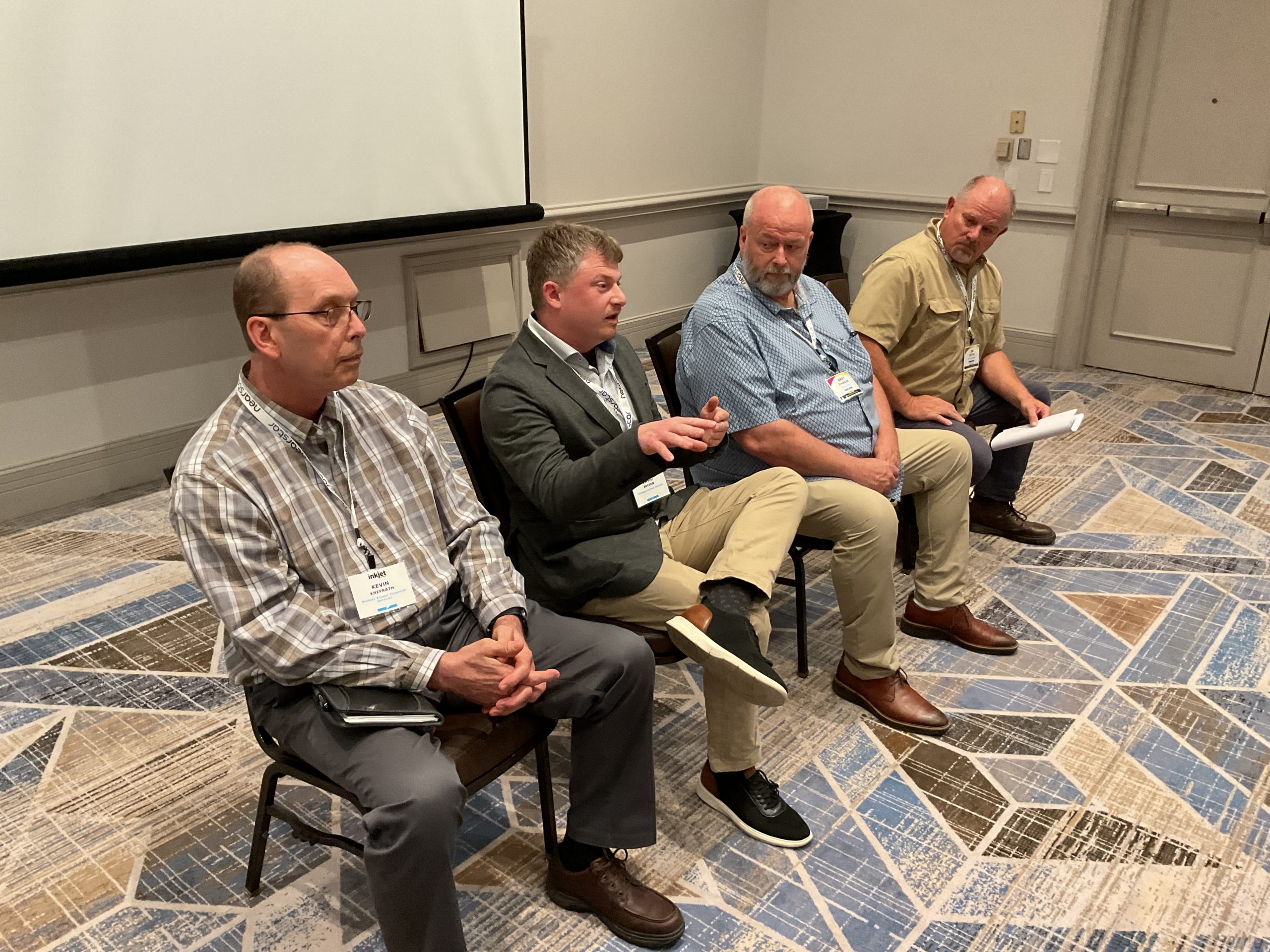
From left: Kevin Kneprath, David Bryson, Bret Johnson and Jim Taylor shared their inkjet experiences and advice.
The panelists use inkjet presses ranging from small Riso and Kyocera devices to continuous-feed presses stretching 140 feet long, including pre and post equipment. They print a range of materials on them, from transactional statements to patient education booklets and school curriculum materials.
Inexpensive Color Printing
One of the key benefits inkjet brought to these in-plants’ operations was inexpensive color printing. Taylor said that when he asked customers at Val Verde USD if they would order more color printing if the cost came down, they said yes, and noted the positive impact color printing has on the education process and students’ ability to retain information. His shop subsequently added a Kyocera TASKalfa Pro 15000C and color printing has increased.

The room was full of in-plant managers, who asked many questions about inkjet printing.
“We could do … full color, [for] less than the cost our black toner was before,” added Mayo Clinic’s Johnson, “I was able to get rid of 40 preprinted shells that we were swapping in and out of trays. The efficiency was just immense.”
One point that came up was whether, in a K-12 environment, schools can save money by stopping the use of colored paper by teachers and instead printing a colored background with inkjet.
“It's cheaper to … print it in color, than it is to run the [colored] paper,” said Bryson, of Hillsboro School District.
Johnson added that, as colored papers become more limited, inkjet allows his in-plant to adapt.
“That's been my vision for a long time, to tint that background,” he said.
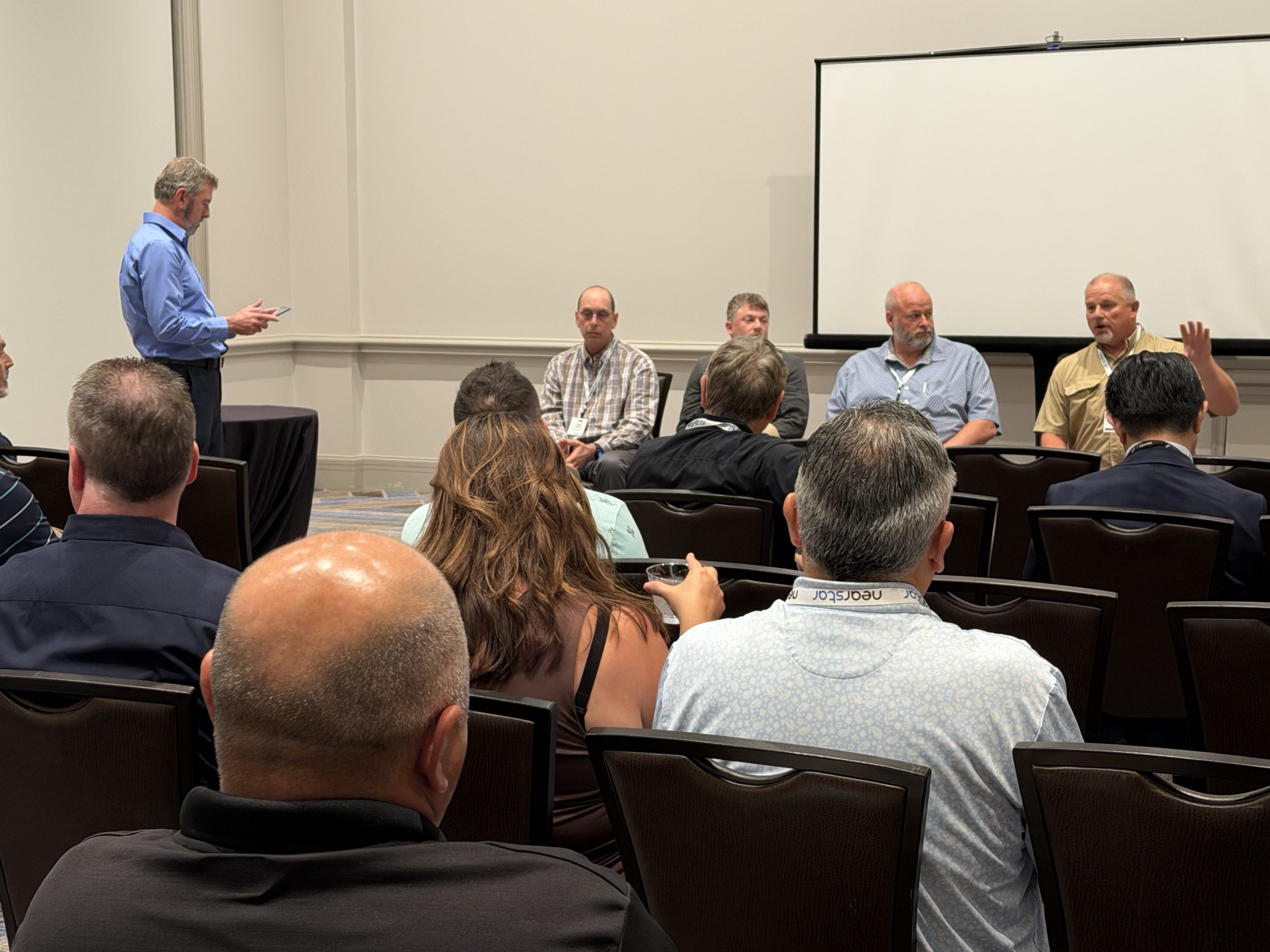
IPI Editor Bob Neubauer (left) interviewed a panel of inkjet press users during the 2026 Inkjet Summit (from left): Kevin Kneprath, David Bryson, Bret Johnson and Jim Taylor.
Concerns about the quality of inkjet output were mostly dismissed by panelists. Johnson noted his shop’s inkjet-printed pieces have won In-Print contest awards.
“The quality [of inkjet] isn't even a consideration anymore,” he said.
Still, different machines offer different levels of quality, noted Bryson
“My Riso’s right next to my [Canon] iX, and it doesn't look as good,” he said – but it’s good enough for his customers, and that’s what matters.
Why Inkjet?
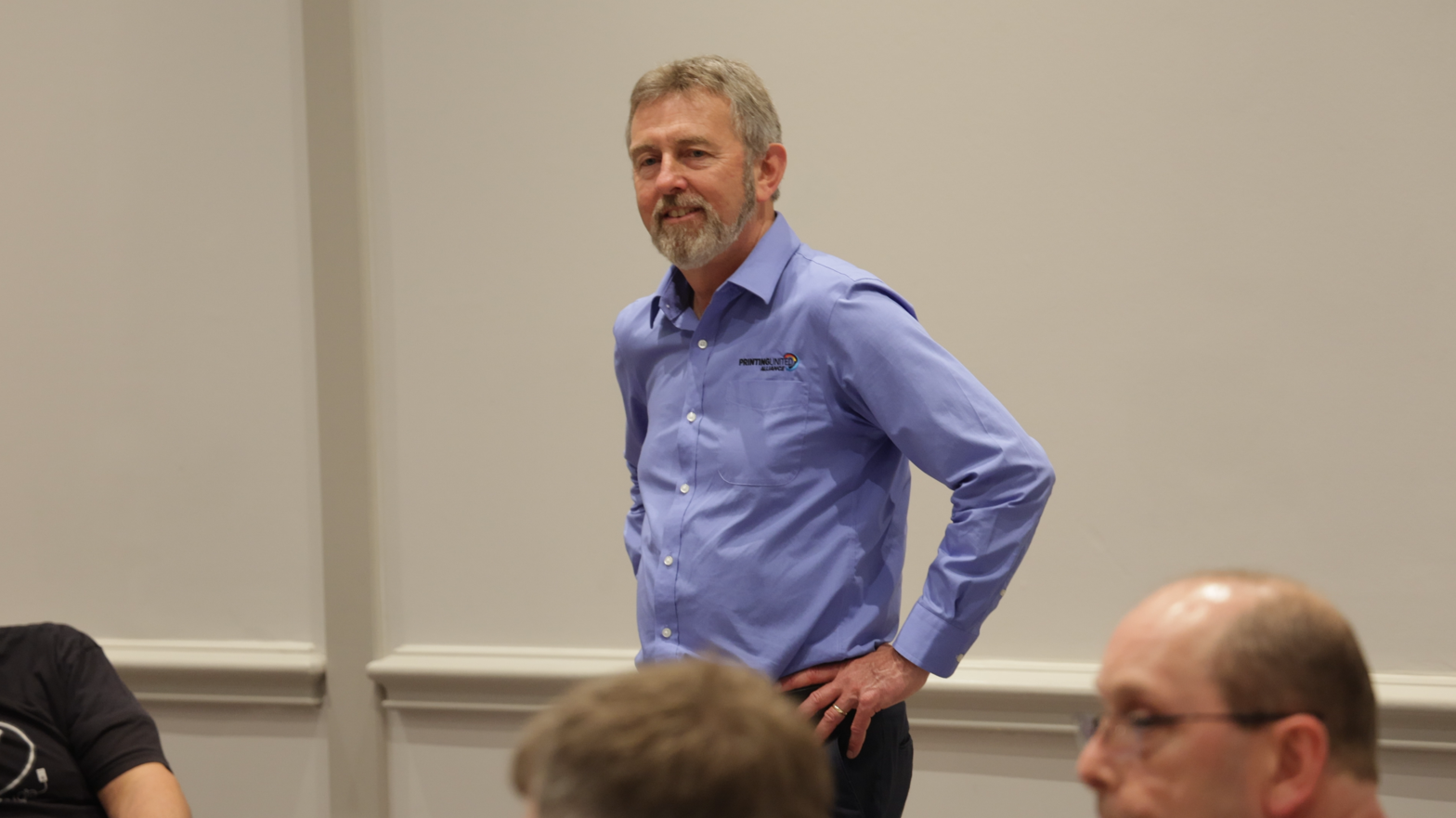
IPI Editor Bob Neubauer interviewed the panel of inkjet users.
When asked why their in-plants made the decision to switch to inkjet, Kneprath noted that Wolters Kluwer’s upper management became transfixed with visions of a “paperless society” a few years ago and moved to shut down their offset presses, but when they eventually realized printing wasn’t going away, inkjet proved the best solution for the company’s applications.
Bryson cited two reasons for getting into inkjet: “Efficiency and uptime. I was really frustrated with the toner machines. I was frustrated with calling in service every week on every machine.”
Inkjet promised vast improvements in uptime. “That’s what got my attention on inkjet,” he said.

IPI Editor Bob Neubauer (left) interviewed a panel of inkjet press users (from left): Kevin Kneprath, David Bryson, Bret Johnson and Jim Taylor.
Johnson gave the same reason for moving into inkjet: uptime. “We had a fleet of 10 Xerox [printers] from iGens to Nuveras, running two shifts a day with three service techs in my parking lot every day supporting them,” he said. Now the techs visit less than twice a month.
This improved uptime will enable any in-plant to add new work and increase its volumes, he said.
“If you don't have the volume now, you'll have the capacity to add the volume with the uptime improvement that you're going to get,” Johnson said. “My turnaround times used to be 10 business days. Now I'm doing three [days].”
Although he and others retain toner backup devices, Bryson does not. He reasons that the productivity of inkjet is strong enough that he can easily make up for lost time if a device goes down.
“Even if [the Canon varioPRINT iX3200] goes down, it's rare that it'd be down for more than a day, and we have plenty of time to make the work back up,” he says. “Things on the color toner machine that used to take us four hours to print, we can do in 30 minutes.”
That speed has opened opportunities for new work.
“I was able to bid on jobs and win them that I couldn't do with toner,” Bryson said.
In-line Vs. Off-line Finishing
Both Bryson and Johnson have in-line finishing on their inkjet presses. While many inkjet users say this decreases the productivity of inkjet, since the finishing equipment runs slower, Bryson says the impact is minimal – and with a small facility, he didn’t have much choice anyway.

The room was full of in-plant managers, who asked many questions about inkjet printing.
“It was my only option,” he said. “I didn't have room in my shop to have a lot of offline or near-line [equipment]. And to have it in-line is really helpful.”
Johnson said in-line finishing worked best in his in-plant because otherwise the shop would have to print to rolls and move them to an off-line finisher.
“The press is so efficient that I could be way more efficient from a productivity perspective, having it in-line,” Johnson said.
Researching Inkjet
Panelists shared steps they took to research inkjet before buying a press. Taylor got his team on board with inkjet technology by bringing them on site visits to other local in-plants.
“That helped a lot to open up their eyes,” he said. “Getting them involved has probably been the biggest help.”
Johnson also brought a team on several visits to printers with inkjet – without the OEMs – to get candid feedback from operators and managers using the technology.
Bryson warned his peers to watch for unexpected costs beyond just the presses, such as the reverse osmosis water system his shop had to install for the shop’s humidifiers.
“Don't just look at the ink cost or the click cost and the box cost. Look at the monthly maintenance, look at all the service costs included,” he advised. “There's a lot of hidden fees in there that can drastically change which machine is best for you.”
The panel discussion proved to be one of the highlights of the Inkjet Summit, packed with practical advice for in-plant attendees. In-plants preparing to make a move into production inkjet should consider applying to attend the 2027 Inkjet Summit, to be held April 19-21, 2027, at the Hyatt Regency Hill Country Resort and Spa in San Antonio. Fill out an interest form here.
Bob has served as editor of In-plant Impressions since October of 1994. Prior to that he served for three years as managing editor of Printing Impressions, a commercial printing publication. Mr. Neubauer is very active in the U.S. in-plant industry. He attends all the major in-plant conferences and has visited 200 in-plant operations around the world. He has given presentations to numerous in-plant groups in the U.S., Canada and Australia, including the Association of College and University Printers and the In-plant Printing and Mailing Association. He also coordinates the annual In-Print contest, co-sponsored by IPMA and In-plant Impressions.


