Omaha Public Schools Bets Big with New Investments


Getting one or two new pieces of equipment is nothing out of the ordinary for an in-plant. But installing more than 10 machines at once? That’s a bit more unusual. But that is exactly what Omaha Public Schools has done.
Nikki Hiller, administrator of Printing, Publications and Mail for the Omaha, Nebraska, district, notes that when she took over the department in 2023, she was told the in-plant would be moving into a new and larger facility — in an old biscuit factory.
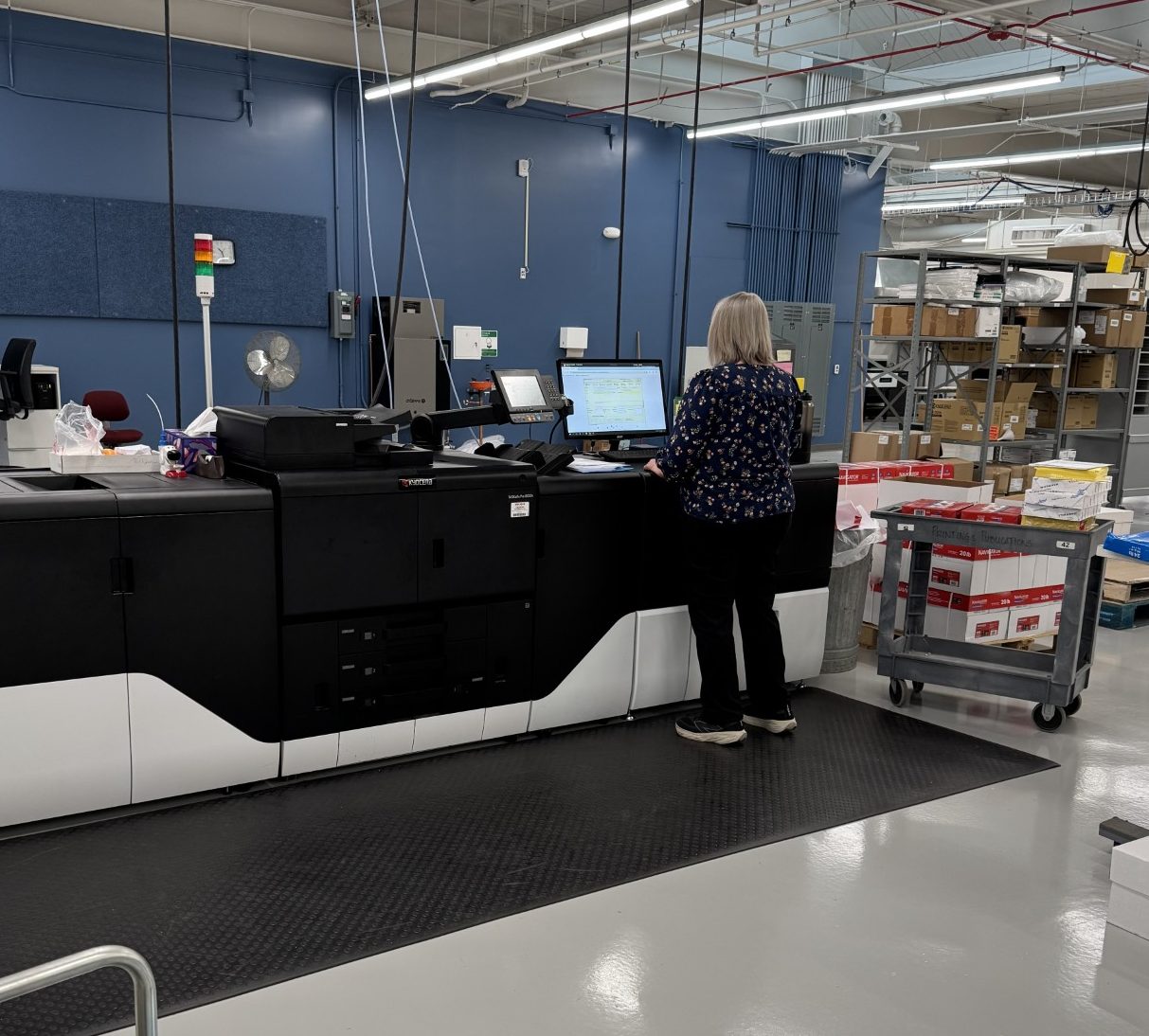
Jody Clausen sends a job through one of the two new Kyocera TASKalfa Pro 15000c inkjet presses at Omaha Public Schools Printing and Publications.
“It was the old U.S. Mills building,” she notes. “We didn’t have to worry about making sure the floors could support the weight.”
As she looked at all the space the in-plant would have available — twice as much as its previous facility — Hiller started thinking beyond just the move. She took a hard look at all the print work the district was outsourcing, then determined what equipment the shop would need to acquire to bring all those jobs back in-house, along with the savings it would bring to the district.
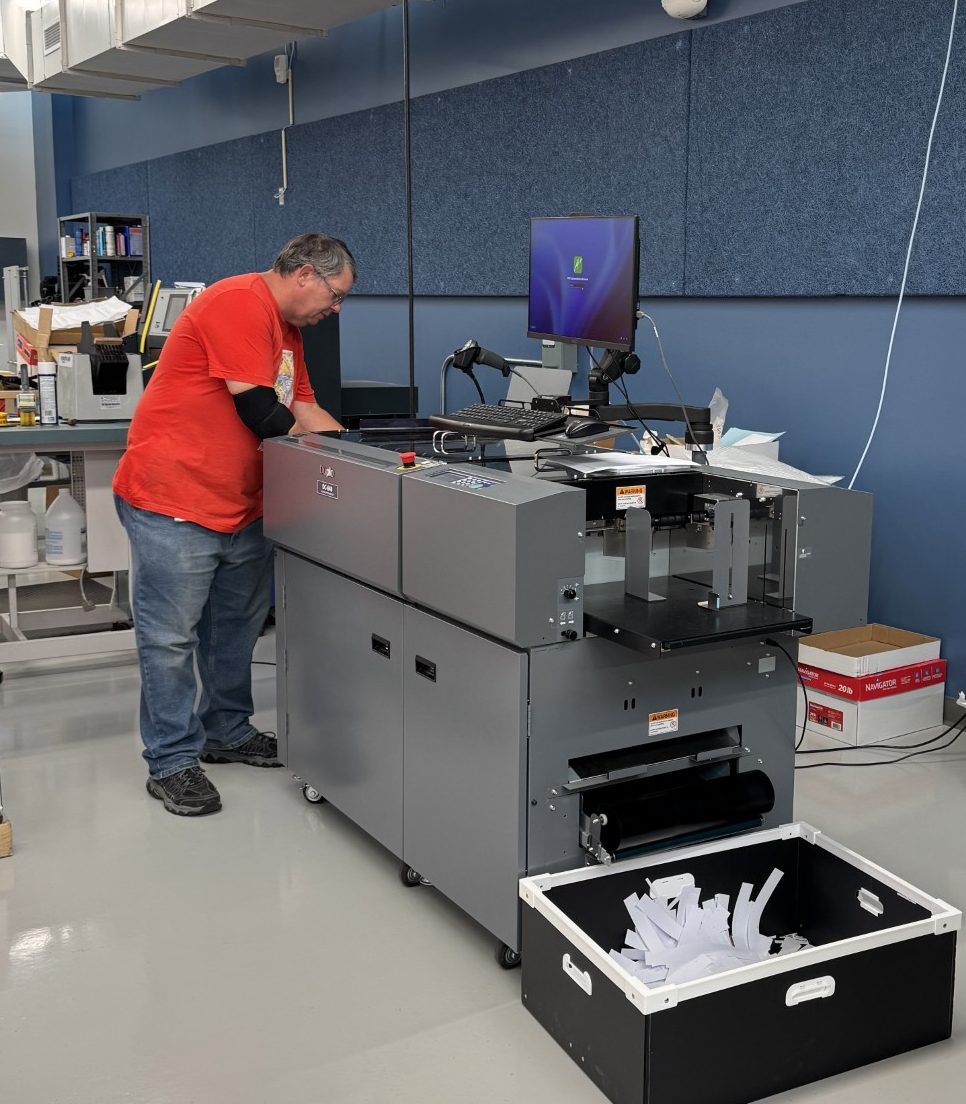
The new Duplo DC-648 will handle slitting, cutting, and creasing for the in-plant. Here, Jim Schlotfeld prepares to run a job.
“It was everything,” she says. “Signage, ADA, wayfinding — my big thing was trying to do the consumables [homework sheets, student workbooks, etc.], so letting the district order the textbooks, but letting us print the consumables so we wouldn’t have that much waste. The transportation wouldn’t be difficult. The logistics of getting it to the school wouldn’t be difficult. And if five more students came, instead of housing all of that, we could have that opportunity [to print on demand.]”
Into the New Facility
In May, the 13-employee in-plant completed its move into the new 30,000-sq.-ft. temperature- and humidity-controlled facility. The arsenal of newly installed equipment would make any in-plant jealous:
- Two Kyocera TASKalfa Pro 15000c inkjet presses
- Riso Velezus T2200 inkjet press with inline Tecnau roll-to-cut and perf
- Ricoh Pro C9500
- Canon Arizona 1360 GTF flatbed wide-format printer with roll option
- Canon Colorado M5W Pro wide-format printer
- Colex flatbed cutter
- Duplo DC-648 slitter/cutter/creaser
- Duplo DC-516 Pro Multi-Finisher
- Quadient DS-700iQ folder/inserter
- C.P. Bourg BB3102 perfect binder with Challenge CMT 330
And Hiller isn’t done yet. “In our busiest time, which is usually July into October, we have every school and teacher that submits all their orders through us. And even with the new machines, we still had difficulty keeping up with that many orders,” she reports. “So I will need more, and I’m working on it. I’m purchasing probably a couple more things.”
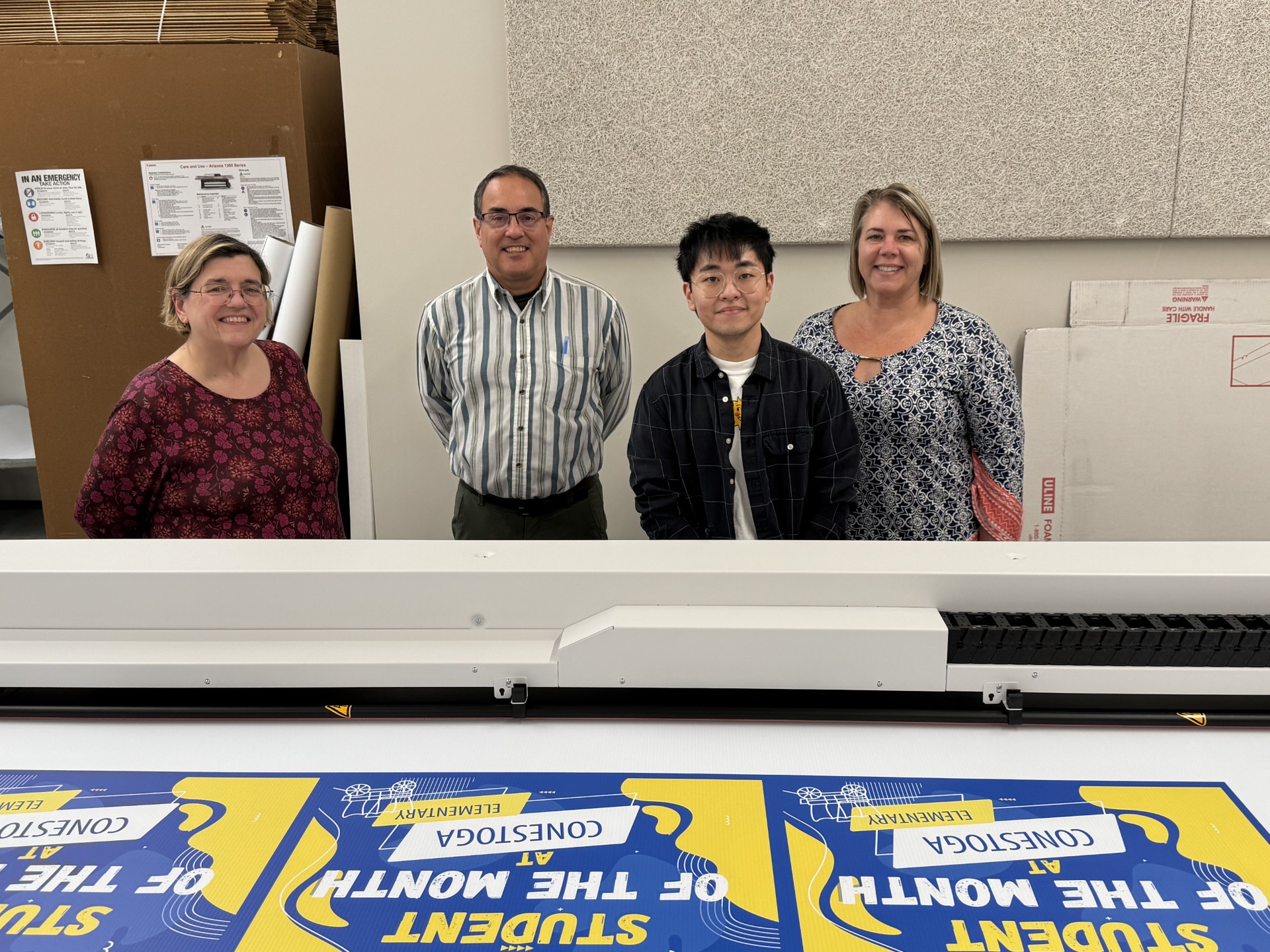
From left: Shelly Dutiel, Kevin Baldridge, Minjung Goo, and Nikki Hiller.
Hiller is researching additional equipment based on those bottlenecks the in-plant experienced.
What are Hiller and her team running on all this new equipment? In addition to wayfinding and ADA signage, the in-plant is producing posters, banners, booklets, brochures, post cards, curriculum, and anything else it can run through the equipment.
That said, Hiller notes that the in-plant still outsources some work — she didn’t want to overwhelm her team by suddenly bringing in all the work for more than 90 schools and 109 locations. Plus, because it’s all brand new equipment, she wants her team to take the time to master each machine, as well as the workflow of the new operation.
An Inkjet Pioneer
Omaha Public Schools Printing & Publications Services was among the first K-12 in-plants to invest in inkjet when it installed a Xerox Brenva in 2018 under previous administrator Steve Priesman. Two years later, the shop replaced its toner presses with a Xerox Baltoro and switched to an entirely inkjet platform.
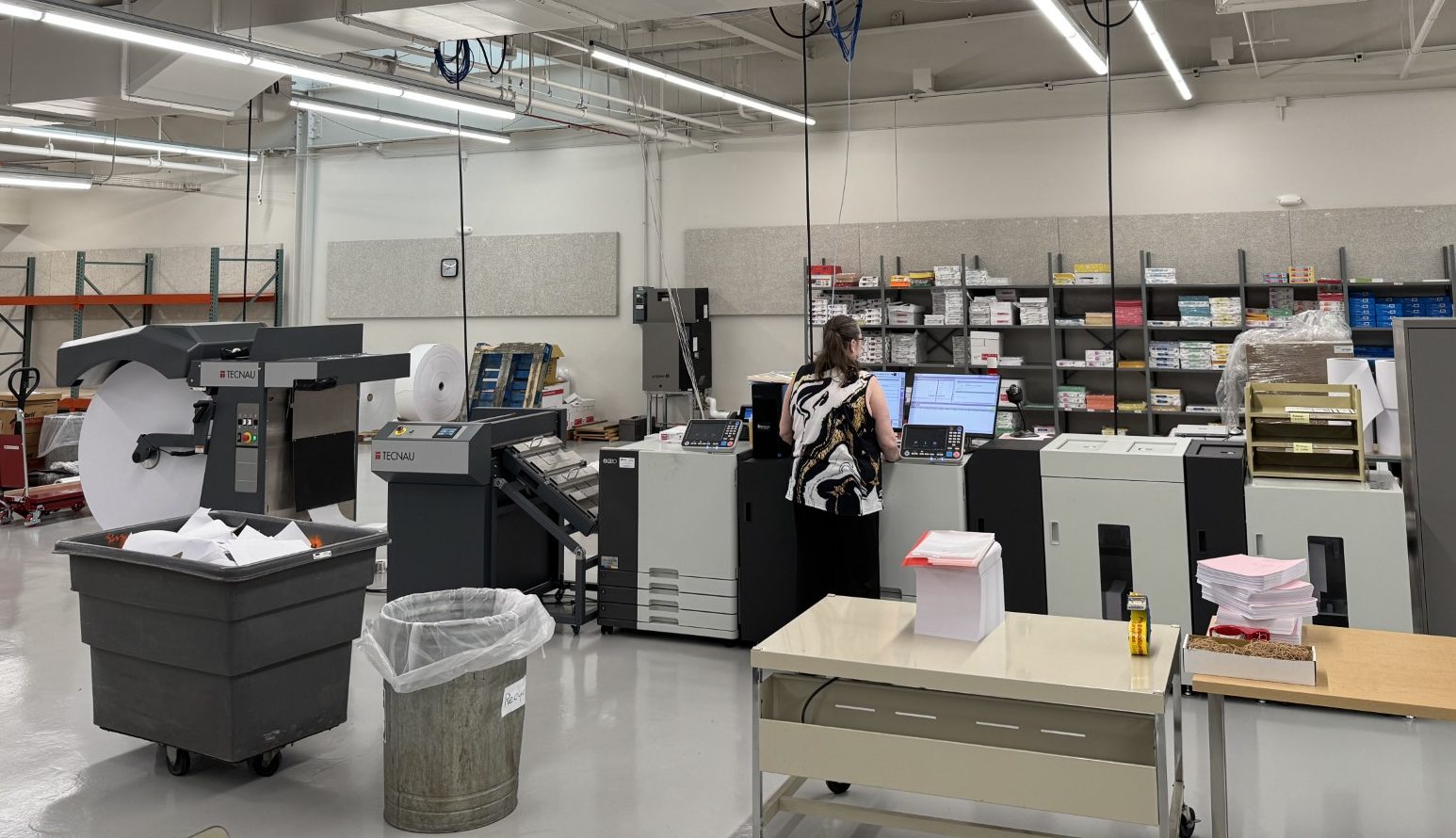
Judy Lambert runs the in-plant’s new Riso Velezus T2200 with inline Tecnau roll-to-cut and perf capabilities.
So one big question is why Hiller chose to move away from Xerox and add Kyocera and Riso inkjet equipment. It came down to cost, she notes.
“Our lease was ending on the [Xerox equipment], and there is a cost to move equipment — the cost is pretty extreme,” she says. “It was more cost beneficial for us to purchase the two Kyoceras compared to [moving equipment]. The pricing on those are really low, and then the quality of what we’re doing for the kids [is] really good.”
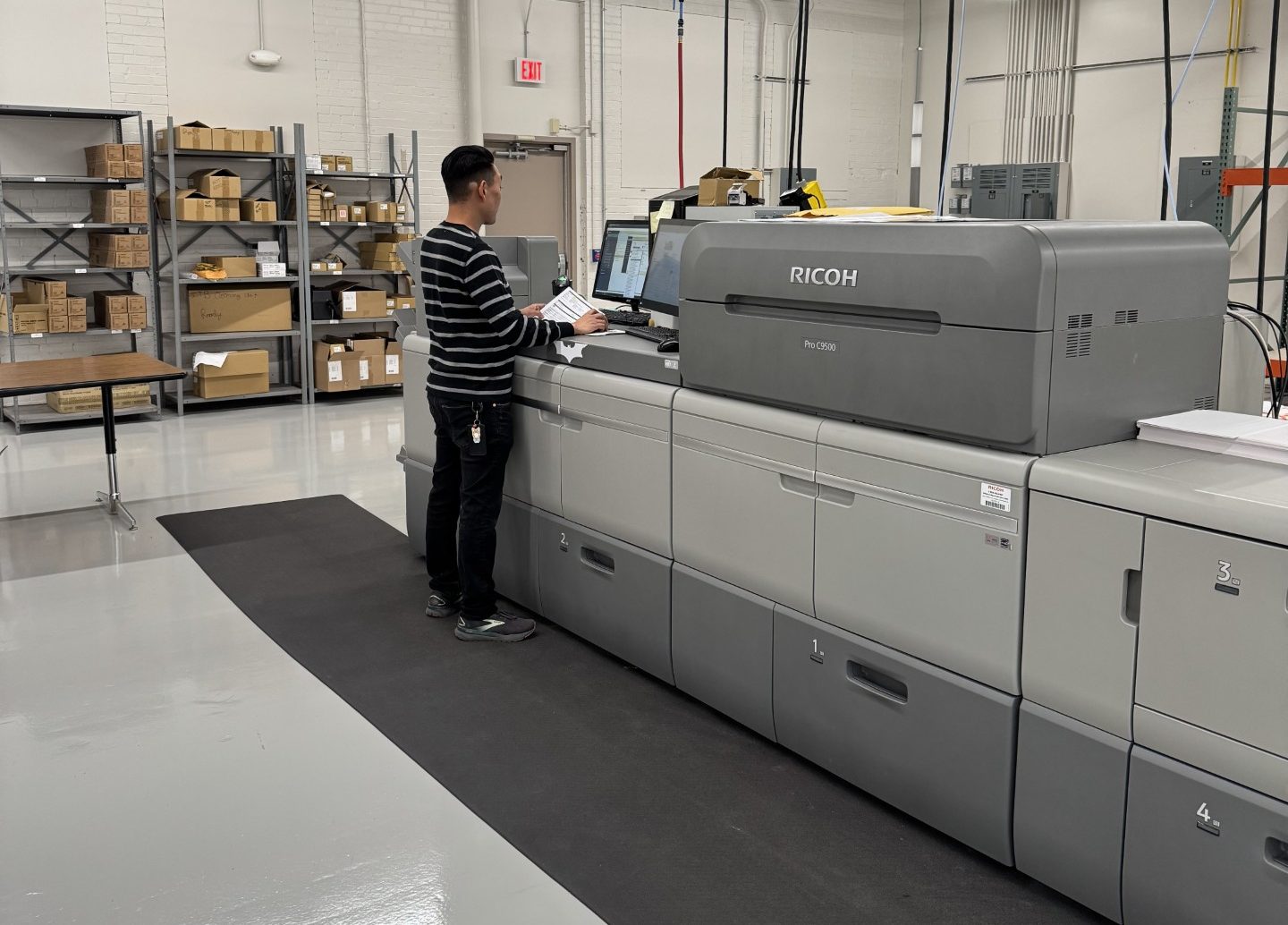
The Ricoh C9500.
The in-plant purchased two Kyocera inkjet presses to diversify the load, with one getting a Plockmatic in-line stitcher to saddle-stitch books, and the other doing “more or less quick copies,” she says. The shop also added the Riso roll-to-cut inkjet press.
“It’s a little more unique than just a sheetfed — we can put a roll on it, and it also has the option to perf,” Hiller notes. It really all came down to ensuring the in-plant has a range of equipment that can handle a range of requests.
Ultimately, the in-plant’s mission is to support the teachers and staff so they can support the students, Hiller says. And investing in this equipment was the best way to do that, she says. It opened up new opportunities while reducing the cost per piece at the same time.
“We can’t physically support the students in a district, but we can be the foundation,” Hiller says. “We will take the work off of [the teachers and staff] so they can do what they need to do.”
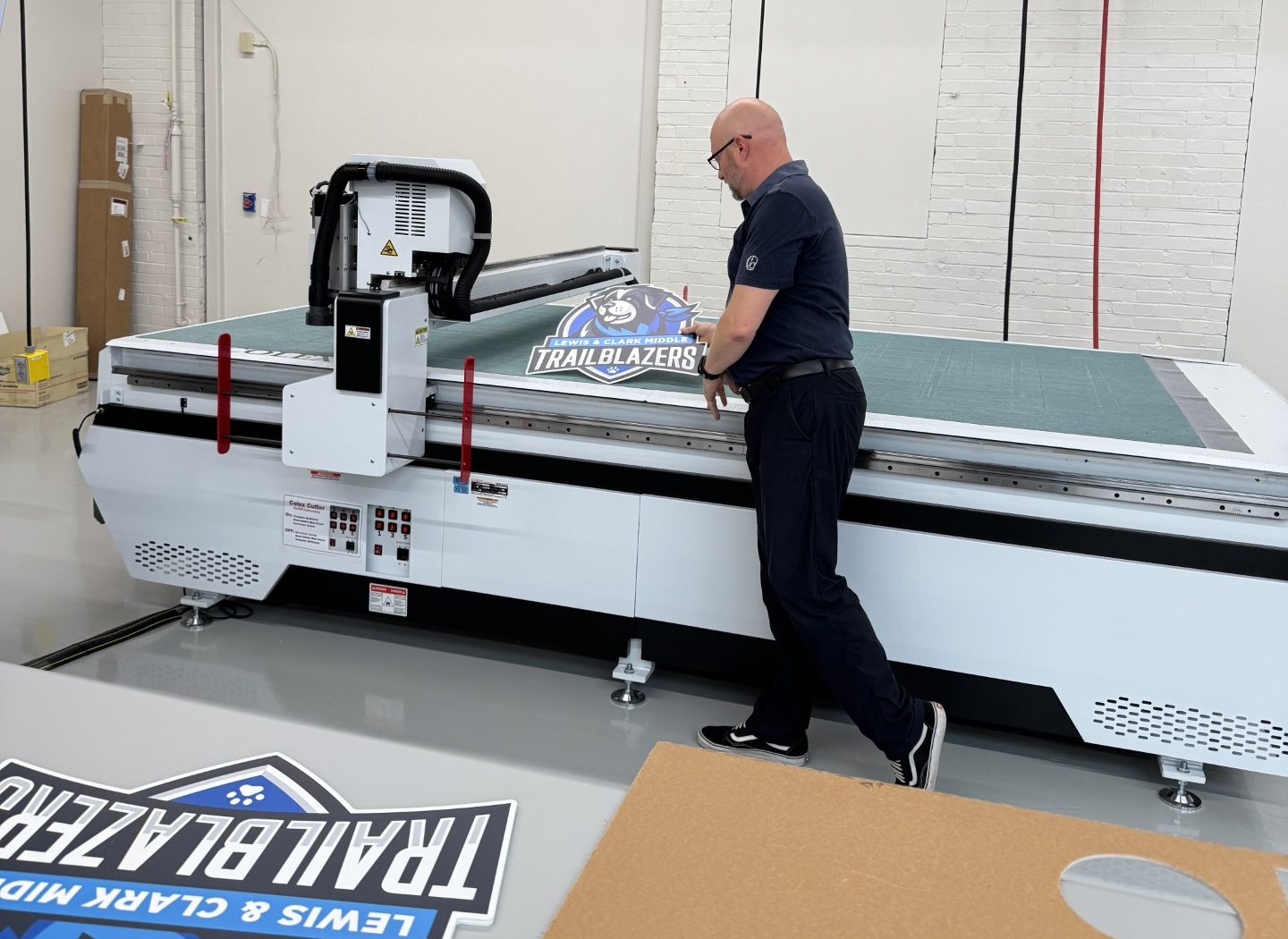
The Colex cutter.
Toni McQuilken is the senior editor for the printing and packaging group.