


Lessons from Leaders: The Next Chapter of Inkjet


The following article was originally published by Printing Impressions. To read more of their content, subscribe to their newsletter, Today on PIWorld.
To kick off the final day of the 14th annual Inkjet Summit in San Antonio, Texas, Ashley Roberts, content director for Printing Impressions, sat down with four inkjet users to talk about the lessons they’ve learned since installing inkjet presses, and what they see coming next for the technology.
The panelists were:
- Lee Christiansen, IPC manager, Hemet Unified School District
- Joe Olivo, president, Perfect Communications
- Jeff Matos, senior director of operations engineering, Broadridge
- Brian Tyll, vice president and general manager, Alliance Franchise Brands.
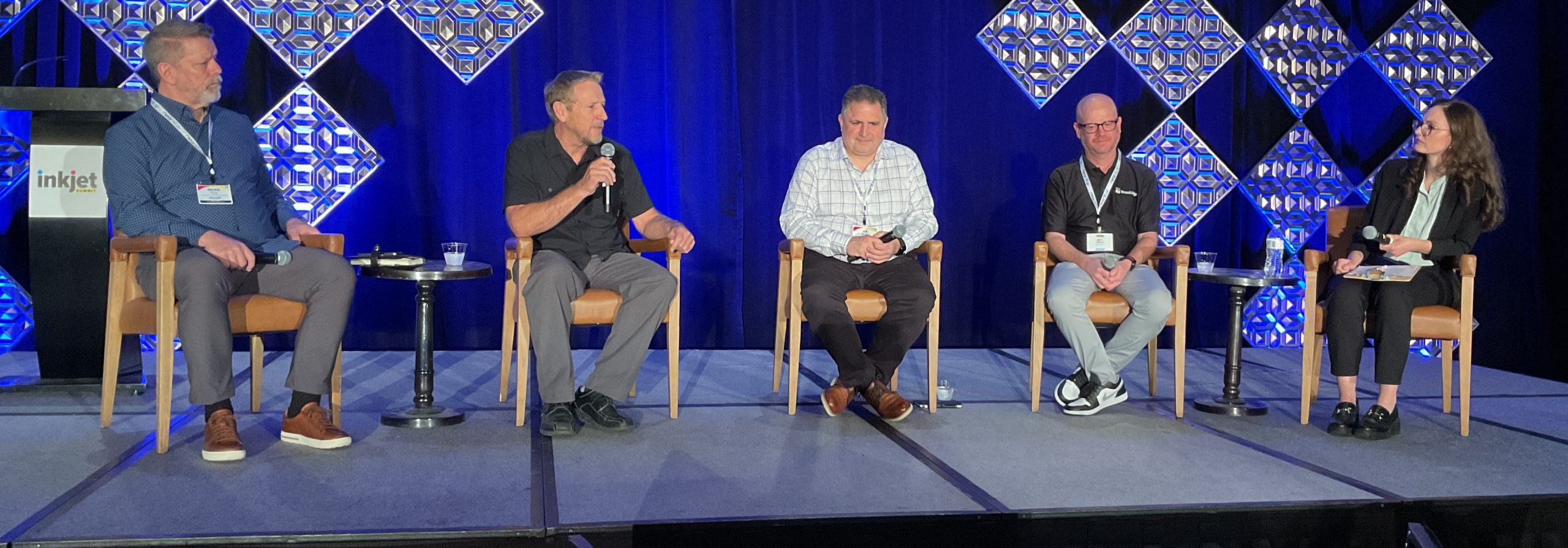 Panelists noted that inkjet has been a game-changer for their operations. Faster speeds, more capacity in a smaller footprint, great quality, and flexibility are just a few of the improvements inkjet brought to their businesses.
But transitioning to inkjet wasn’t without challenges, and one major one was the finishing process — a running theme at this year’s Inkjet Summit. Having faster, more productive presses doesn’t do much good if the finishing can’t keep up. So factoring in finishing at the same time as the press was a key consideration of panelists.
Space is another challenge the panel explored, with several mentioning the need to rearrange or rework the physical workflow of the plant for the most effective operations. It’s something many first-time inkjet purchasers don’t always consider, and it can lead to inefficiencies or costly adjustments needed down the line.
Panelists shared a few observations and pieces of advice:
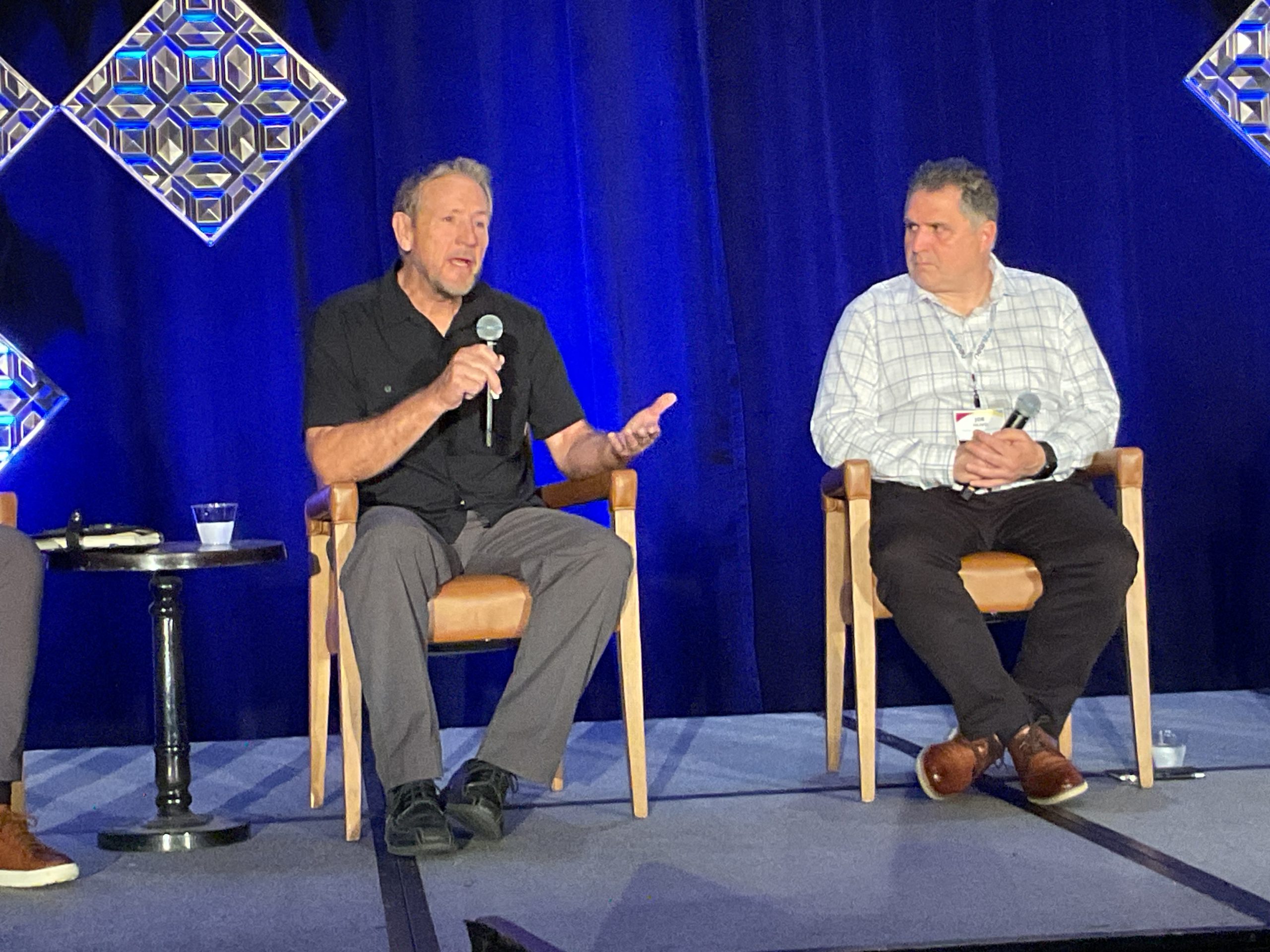
Lee Christiansen speaks during the discussion.
Christiansen said that early in his career he never thought he would see inkjet get to where it is today. He is now a believer in the technology. He advised, “Inkjet will continue to progress … so move forward with the opportunities that you get. You've got the chances, you've got the right partners [at Inkjet Summit], the OEMs, to come out and share their knowledge and take time to bring this together. This is a fantastic opportunity. Now's the time to move on it.”
Tyll noted, “We spent a lot of time doing research. We learned early on that finishing was key factor — just looking at the press it didn't make sense, but when you added in efficiencies and finishing, it made all the sense in the world. So we did a lot of research about ROI. We talked to a lot of people were already doing it.”
Olivo had a practical piece of advice around the financing: pay attention to the contracts before you sign them. He noted, “Given the inflationary times, we're being much more careful signing off on increases automatically every year by a certain percentage. Especially when you're doing contract work, you're going to have a hard time passing on those increases. It can 5-7% a year, and by year three it starts adding up to significant amounts. So just be aware of that.”
Finally, Matos pointed out that all of the equipment manufacturers make great equipment today. It comes down to everything around that equipment that sets them apart, “Have those conversations with the vendors and choose one that you think is going to help you grow into the future, and is going to be a true partner. It's not just about paychecks and invoices and things like that — it's about true partnership, making sure everybody's benefiting.”
The inkjet investment decision is no longer about feeds or speeds — all the presses can hit those, and do it with quality that will be acceptable for the vast majority of applications and customers today. Instead, the panel advised, look at elements like workflow, service/support, software integrations, data collection, and finishing.
The attendees at Inkjet Summit had three days of intense conversations, networking, and learning to start pulling those questions and answers together. But every shop should start having those conversations sooner rather than later, or risk being left behind.


Toni McQuilken is the senior editor for the printing and packaging group.


